

Participants: EMBOTITS SALGOT, S.A (leader), JOAQUIM ALBERTÍ, S.A (beneficiary), CAN GARRIGA BIOCIBUS, S. L (non-beneficiary), SEIDAMATIC, S. L (non-beneficiary), VALIDATECH, S. L (contracted) , INNOVACC (coordinator), Institute of Agri-food Research and Technology IRTA (OPI)
Budget: 287,070,68
Aid: 232.906.40
Project summary
The meat sector in Catalonia is the main agri-food segment, with a business volume of more than 10,000 million euros. This industry is betting on vertical integration and thus guarantee the traceability of products from the farm to the point of sale. Catalonia is a leader in Spain in the production of quality meats and sausages, with a tradition that represents 30% of national production. Cooked meat products, made using techniques such as thermal treatment (pasteurization, sterilization, smoking), require strict monitoring to ensure food safety, especially in terms of reducing pathogens such as Listeria monocytogenes and Clostridium botulinum.
To improve the organoleptic quality and sustainability of cooked meat products, it is crucial to optimize thermal processes. Today, many manufacturers use excessive times and temperatures, which can deteriorate the flavor and increase unnecessary consumption of energy and water. The project proposes to improve these processes, reducing cooking time and temperature, without compromising food safety, to obtain better quality and more sustainable products. This optimisation would allow for better resource management and an improvement in the competitiveness of the sector.
The main objective of the project is: the development of a support tool for decision making regarding the design, optimization and validation of thermal treatments of cooked meat products. This tool, called "LeQuSos", aims to predict Cumulative Lethality (Pvalue), Product Quality (CValue) and Process Sustainability (Sosvalue), based on the process conditions defined by users. Thus, it seeks to improve food safety, organoleptic quality and energy efficiency in the production of cooked meat products.
To achieve these objectives, the project includes several actions, such as the implementation of an IoT monitoring system to record thermal data during the cooking process, the development of a predictive model based on physical laws to predict the distribution of temperature in the product, and the obtaining of the kinetic parameters of thermal inactivation, quality and sustainability. In addition, the parameters will be integrated within the "LeQuSos" tool to optimize the processing conditions and validate the results obtained in experimental processes.
Project co-financed by the EU through the intervention 7161 of PEPAC 2023-2027
Share:

Intuitive software on a single platform that allows you to work with traditional systems with thermocouples and dataloggers. Guarantees traceability a
Read more
Steam was the fuel of the first industrial revolution, in the second it was electricity and in the third it is powered by the automation of processes,
Read more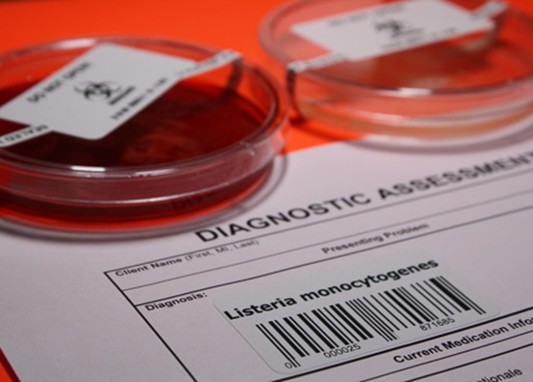
Two years ago, Andalusia suffered the largest outbreak of Listeriosis in Spain, which caused the death of three people, five miscarriages and 210 peop
Read more
The IRTA sets up the project BESTDATE, that wants to contribute to reduce the alimentary waste establishing the correct date of labeling of the foods.
Read more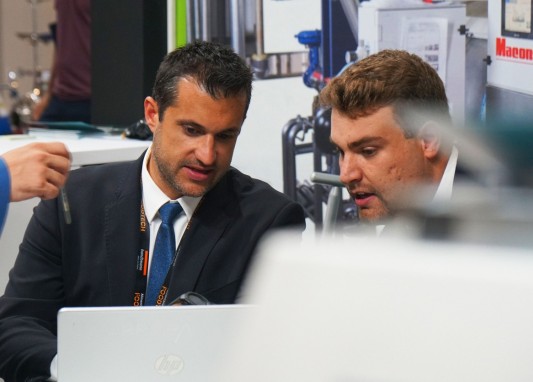
The Alimentaria FoodTech Barcelona fair was an impressive event that brought together numerous companies in the sector, and Validatech stood out as on
Read more
We sincerely thank El POZO Alimentación S.A. for having selected our company as a trusted partner for personalised advice on your cooking, drying and
Read moreContact us
Do you have any questions or queries?
Ask us what you need and we will get back to you to answer and answer any questions you may have.